Ask anyone planning a Kenya safari what they most want to see, and the answer is almost always the same: the Big Five. The lion, the leopard, the African elephant, the Cape buffalo, and the rhinoceros. These five animals have captured the imagination of wildlife lovers around the world for generations, and Kenya is one of the finest places on earth to encounter all of them in their natural habitat. They are the centrepiece of nearly every safari itinerary, the subject of countless wildlife films, and the reason many people decide to visit Africa in the first place.
But the term Big Five has a darker origin than most people realise, and understanding that origin adds a layer of depth and complexity to the experience of encountering these animals in the wild. It also raises important questions about the relationship between humans and wildlife that are worth sitting with during a safari, when you are close enough to these animals to feel the weight of what they represent.
Where the term came from
The Big Five were not originally classified by conservationists or wildlife photographers. The term was coined by big game hunters in the colonial era, and it referred specifically to the five animals considered the most dangerous and therefore most prized to hunt on foot. The lion and leopard for their ferocity and unpredictability when threatened, the elephant and buffalo for their size and willingness to charge, and the rhinoceros for its aggression and poor eyesight, which made encounters with it particularly dangerous. These were the animals that most frequently killed hunters, and that difficulty was precisely what made them desirable trophies.
Today, the term has been reclaimed entirely by the tourism and conservation industry as a celebration of Africa’s most iconic wildlife, and the Big Five are now associated with camera lenses rather than rifle barrels. But knowing the origin of the phrase puts you in the minority of visitors who understand what they are actually looking at – creatures that survived millennia of predation, climate change, and human encroachment, and are now among the most protected and monitored animals on the continent.
The lion
Kenya’s lion population is concentrated primarily in the Masai Mara, Amboseli, Tsavo, and Samburu. The Mara is the best park for lion sightings by a significant margin, with several large, well-studied prides that are highly habituated to safari vehicles and have been the subjects of long-term research programmes. Lions are deeply social animals, and watching a pride interact – the cubs play-fighting with a patience-testing ferocity, the males resting with their particular brand of lordly indifference, the females coordinating before a hunt with a precision that speaks to years of learned cooperation – is one of the most compelling wildlife experiences Kenya offers.
Dawn and dusk are the best times for lion activity, when the cooler temperatures bring them out of the shade and onto the hunt. During the heat of the day, lions are champions of energy conservation – they can sleep for up to twenty hours in twenty-four – and finding them under a tree in the midday sun requires a sharp eye. Lion conservation in Kenya is actively monitored and supported by the Kenya Wildlife Service, whose website provides current conservation data and park-specific wildlife information.
The leopard
Of all the Big Five, the leopard is the most difficult to find and, for many visitors, the most memorable encounter when it finally happens. They are solitary, largely nocturnal, and masters of concealment – capable of disappearing into vegetation in ways that seem physically impossible for an animal that can weigh up to sixty kilograms. A leopard lying along a branch in dappled shade is effectively invisible until it moves, and even experienced guides sometimes drive past them without realising they are there.
The Masai Mara and Laikipia Plateau offer the best chances of leopard sightings in Kenya, and a good guide with knowledge of individual animals’ home ranges and favoured trees dramatically improves your odds. When you do find one – perhaps stretched out along a tree branch in the golden afternoon light with a kill cached in the branches beside it – the experience stops conversation. There is something about the combination of beauty and latent danger in a leopard at rest that is unlike any other wildlife encounter.
The African elephant
Kenya’s elephant population is one of the most celebrated in Africa, and Amboseli is the finest park in the country for elephant encounters. The herds here are large, calm, and deeply accustomed to the presence of vehicles. The research conducted by the Amboseli Elephant Research Project – one of the longest-running wildlife studies in the world, tracking individual elephants and their family groups across multiple generations – means that many of the animals you encounter have been documented and named, their life histories known to researchers in remarkable detail.
Elephants are deeply intelligent, emotionally complex animals with long memories, strong family bonds, and demonstrated capacity for grief, joy, and tool use. Spending time watching them in the wild changes how you think about non-human consciousness in ways that persist long after the safari ends. The Sheldrick Wildlife Trust, based in Nairobi, has been rescuing and rehabilitating orphaned elephants for decades and offers important context for the elephants you encounter on safari – context about the threats they face, the intelligence they possess, and the conservation effort required to protect them.
The Cape buffalo
Consistently underestimated by first-time visitors in favour of more glamorous Big Five members, the Cape buffalo is arguably the most dangerous animal on the list. They are powerful, unpredictable, highly intelligent, and known for circling back to ambush and charge perceived threats – a behaviour that has earned them a grim reputation among hunters and guides alike. Old solitary bulls, separated from the herd by age or injury, are considered particularly dangerous and are given a wide berth even by experienced field guides.
In the Mara and Tsavo, buffalo are often seen in herds that can number in the thousands – a wall of dark bodies moving slowly across the plain, horns catching the light, dust rising in clouds around their hooves. It is one of those sights that conveys the sheer biomass of the African savannah in a way that individual animal sightings cannot. Do not dismiss the buffalo simply because it is not as photogenic as a lion.
The rhinoceros
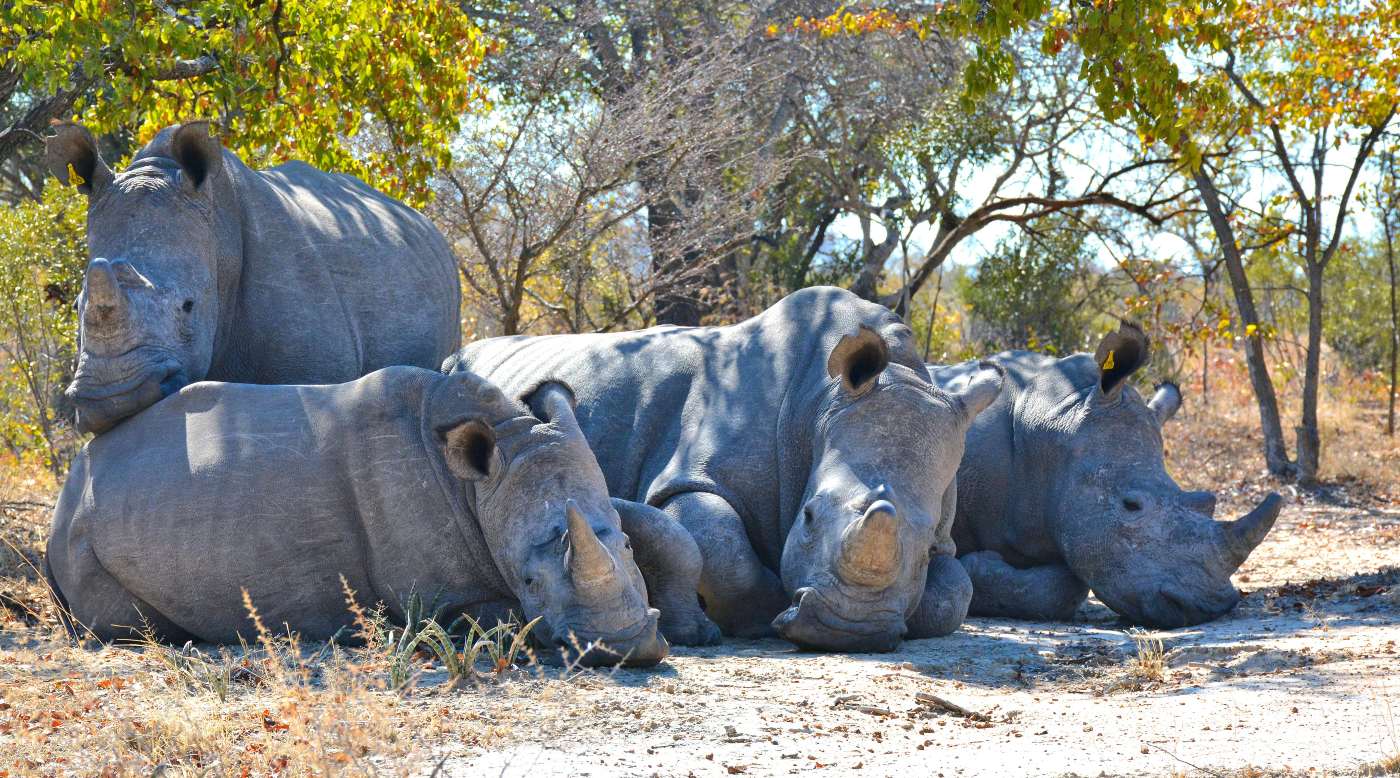
Kenya’s rhino population was devastated by poaching in the latter half of the twentieth century, reduced from tens of thousands to a few hundred animals in the span of a generation. Wild rhino sightings are no longer common in most parks as a result, but the conservation story since then is one of genuine, hard-won progress. The best place to see rhinos in Kenya today is Ol Pejeta Conservancy in Laikipia, which hosts the largest black rhino population in East Africa and is also home to the last two northern white rhinos on earth – Najin and Fatu, a mother and daughter who represent the functional end of their subspecies. Their story is a sobering and essential lens through which to understand the stakes of wildlife conservation.
Visiting Ol Pejeta is an emotionally complex and deeply important experience. You leave not just with a remarkable wildlife encounter, but with a clearer understanding of what has been lost and what is still possible to protect – if the will and the resources exist to do so. However, while the Big 5 are the biggest attractions, Kenya has plenty of wildlife as you can see in this post that highlights other wild animals that are found in Kenya.