I used to be an over-packer. I am not embarrassed to admit it, because I think it is the near-universal starting point for most people before experience teaches them otherwise. Before every trip I would spend days laying out outfits on the bed, convincing myself that I needed a different combination of clothing for every possible social scenario, that the weather might turn in a direction I had not anticipated, that a formal occasion might materialise unexpectedly, that some evening activity would require shoes I had not yet packed. I would eventually sit on a suitcase to close it and check a bag that weighed eighteen kilograms for a five-day trip.
Then I went on a three-week overland journey through East Africa with a bag I could barely lift, and by day four I was washing the same two outfits every other evening in a lodge sink, wearing the same pair of shoes every single day without exception, and nothing about my life was diminished in any meaningful way. I came home, repacked my entire approach to travel from first principles, and I have not checked a bag since. I am going to tell you everything I learned.
The mindset shift comes first – everything else follows
Before any practical advice about what to pack and what to leave behind, there is a shift in thinking that makes packing light genuinely possible rather than just theoretically appealing. It is the recognition that you are not packing for a fashion catalogue or a social performance – you are packing for a life being lived at pace and in motion, in unfamiliar places where the goal is experience, not appearance. Nobody on the Masai Mara cares what you are wearing. Nobody at a beach restaurant in Diani is evaluating your outfit choices. The people worth spending time with are interested in you as a person, not in the variety of your wardrobe.
The second part of the mindset shift is practical: trust that the world has shops. If you forget something or run out of something, you can almost certainly buy it. Kenya has pharmacies, supermarkets, street markets, and boutiques in every city and most larger towns. The deeply embedded anxiety that drives over-packing – the fear of needing something you do not have, in a place where you cannot get it – is almost always unfounded, especially for travellers visiting East Africa, where the infrastructure for basic and not-so-basic consumer needs is genuinely comprehensive in most tourist areas.
The specific list that works for trips up to three weeks
For any trip of up to three weeks – safari, coast, city, or a combination – I pack everything into a 40-litre backpack or small rolling bag that fits in an overhead locker. The clothing allocation is: three to four tops that can be layered and mixed freely, two pairs of trousers or bottoms, one of which is lightweight and quick-drying for active days and one slightly smarter for evenings out, one warm layer in the form of a compact fleece or light down jacket, two pairs of shoes – comfortable walking shoes that handle both trail and restaurant without looking out of place, and a pair of flip-flops or sandals for the coast and camp – and underwear and socks for five to six days, which wash and dry overnight.
The toiletry bag is the area where most over-packers carry the most unnecessary weight. Solid shampoo and conditioner bars weigh almost nothing compared to full bottles, last as long, and are not subject to liquid restrictions. A multi-use moisturiser with SPF eliminates several products at once. Most accommodation in Kenya provides soap and basic toiletries. Everything else – any medication you take regularly, a basic first aid kit, sun protection, insect repellent – fits into the edges of the bag around the clothing. The total weight stays under seven kilograms.
What safari-specific packing actually requires
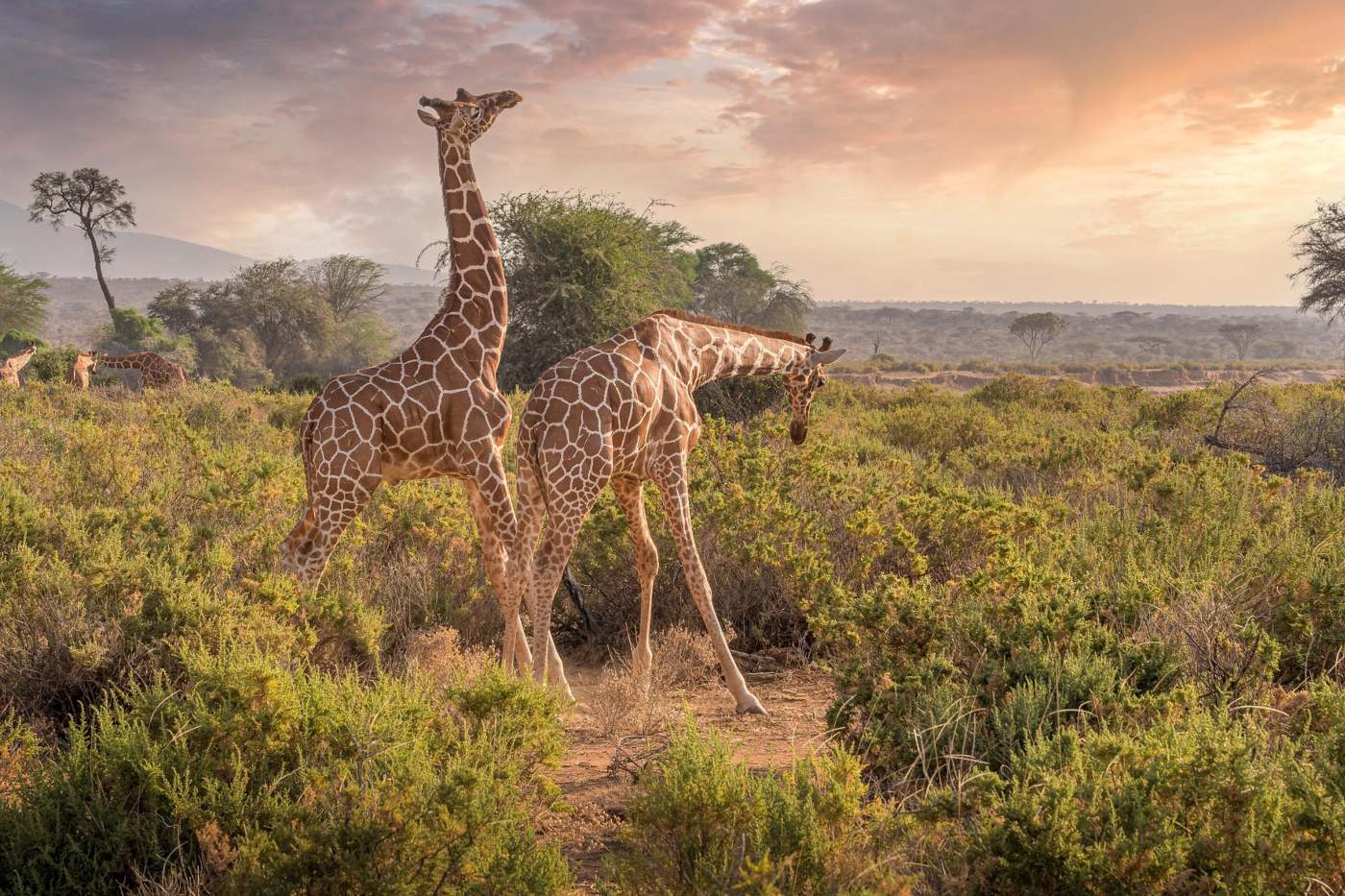
If your trip includes a safari – and I hope it does – there are a few specific considerations worth building into your packing. The Kenya Wildlife Service advises neutral-coloured clothing for game drives: khaki, olive, tan, grey, and muted earth tones. This is practical advice rather than aesthetic prescription – bright colours and white can startle wildlife and make you more visible in environments where the whole point is to observe without disturbing. Neutral tones also tend to hide dust and red soil far more forgivingly, which becomes relevant after approximately six hours in an open safari vehicle on unpaved roads.
Layers are essential. The Masai Mara and the Kenyan highlands can be genuinely cold at dawn even in the middle of the year, and a warm fleece you packed specifically for morning game drives will earn its weight in the bag many times over. By midday the same day, you will be in a t-shirt. This is the nature of the Kenyan climate, and it means a layering system is not optional – it is the only approach that covers the full range of temperatures you will encounter in a single day.
For broader destination-specific packing advice covering Kenya’s different regions and their varying climates and activities, the Tourism Regulatory Authority and the Kenya Tourism Board together provide comprehensive travel guidance for visitors, including cultural dress considerations for coastal areas with significant Muslim communities, where modest clothing is both respectful and appreciated.
What to leave behind – the hardest part
The hardest packing decisions are almost never about what to include – they are about what to leave behind. Here are the categories that most consistently add weight without adding value: more than two pairs of shoes (you will wear one pair almost exclusively), books you might read (download them), full-size toiletries (everything comes in travel size or can be bought locally), outfit-specific accessories that only work with one item of clothing, and any item you packed because you thought you might want it rather than because you have a specific plan for it.
The question I ask myself about every item in the final pack is simple: do I have a specific plan to use this, or am I packing it as insurance? Insurance packing is the enemy of light travel. If the honest answer is insurance, the item goes back on the shelf.
The freedom that comes with it
This is the part that is genuinely difficult to convey to someone who has not experienced it. There is something about moving through the world with only what you actually need that changes the texture of the experience itself. You are less burdened in both the literal and the figurative sense. You move through airports and bus stations and ferry terminals with an ease and speed that heavy luggage makes impossible. You do not worry about losing or damaging things. You feel, in a small but persistent and real way, freer – more mobile, more adaptable, more present to the experience rather than managing the logistics of your possessions.
The best travel experiences I have ever had were the ones where I felt most free to move and respond to whatever the day offered. Packing light is one of the simplest and most reliable ways to create the conditions for that freedom. It is a skill worth developing, and like most skills, it improves with practice. Start with your next trip. Pack half of what you think you need. You will not miss any of it.