Most people who visit Kenya come for the safari. They leave having seen lions and elephants and the vast golden plains of the Masai Mara, and they are satisfied – as they should be. But a significant number of them never make it to the coast, which is a genuine shame, because Kenya’s Indian Ocean coastline is one of the finest in Africa, and it offers an experience so different from the safari interior that it feels, in many ways, like a different country entirely.
The coast is warm, slow, and ancient. The Swahili culture that flourishes here has been shaped by centuries of Indian Ocean trade routes – by Arab merchants who arrived with the monsoon winds and stayed, by Portuguese explorers who left their fortresses and their influence on the architecture, by Indian traders who wove themselves into the fabric of coastal society over generations, and by the indigenous coastal communities who built their own rich civilisation long before any of them arrived. The food, the language, the architecture, the music – all of it carries that layered, multi-directional history in ways that are endlessly interesting to explore.
Diani Beach: accessible, beautiful, and endlessly pleasant
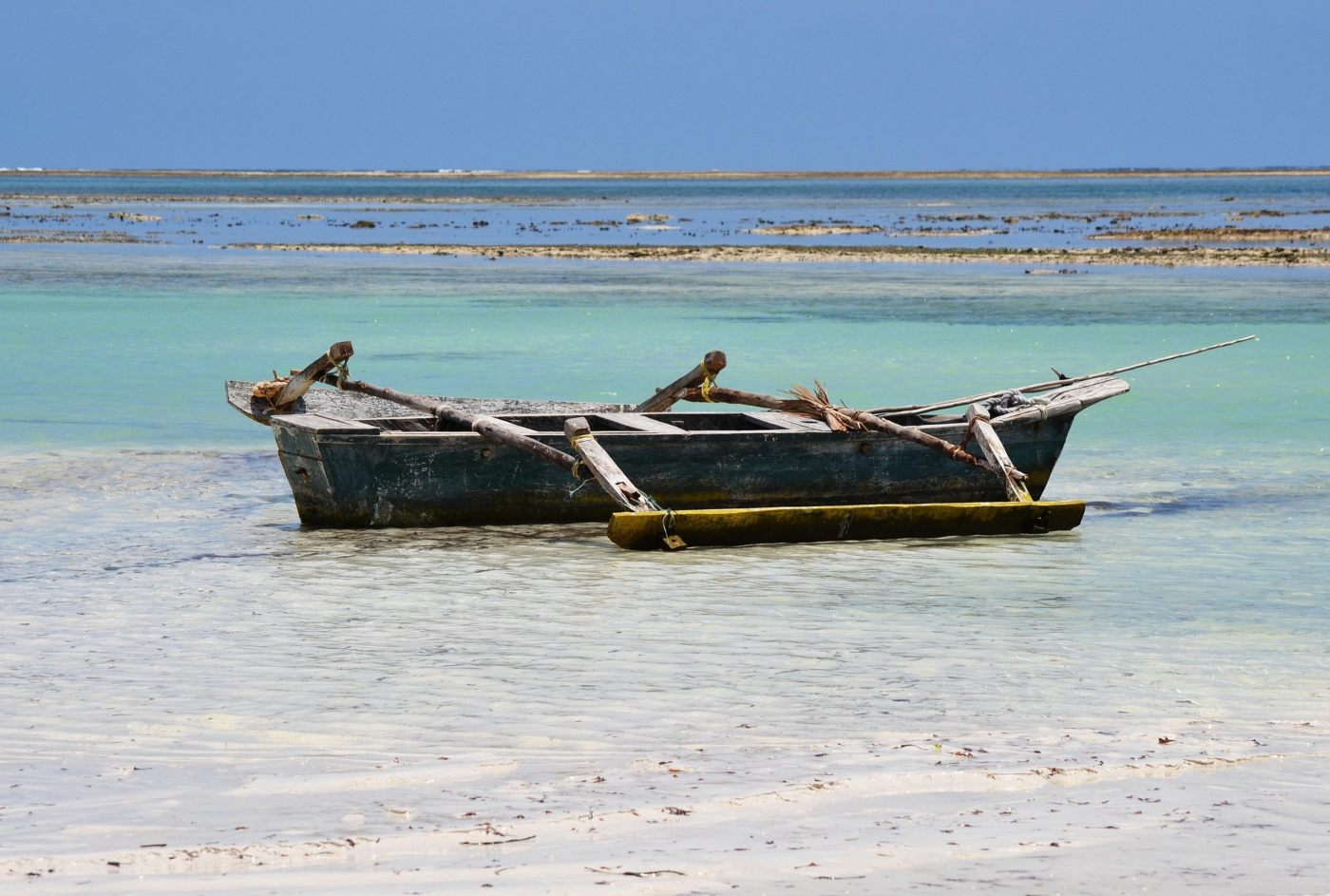
Diani Beach, located about 30 kilometres south of Mombasa along a well-maintained coastal road, is Kenya’s most popular beach destination and the easiest to reach for most visitors. A long, unbroken stretch of powdery white sand lined with casuarina trees and fronted by clear, calm, turquoise water, Diani is genuinely beautiful in the way that certain beaches only are – the kind of place where you put your things down, look out at the horizon, and exhale properly for the first time in months. The water is warm year-round, the sand is fine and clean, and the reef just offshore makes the area excellent for snorkelling and diving.
Diani has developed significantly as a tourist destination over the past two decades, and the town behind the beach now offers a solid range of restaurants, beach bars, water sports operators, and accommodation options ranging from budget guesthouses to luxury boutique hotels. The colobus monkeys – large, striking black and white primates unique to the Kenya coast – are a regular presence in the trees along the beach road, and the Colobus Conservation centre nearby does important research and rehabilitation work. For the most comprehensive and up-to-date guide to Diani and Kenya’s coastal destinations, Magical Kenya has detailed destination guides including seasonal advice and activity recommendations.
Watamu: quieter, wilder, and deeply special
About 100 kilometres north of Mombasa, past the historic port city of Mombasa and the resort town of Malindi, lies Watamu – smaller and significantly less developed than Diani, and for a growing number of travellers, the more appealing destination precisely because of that. The beach is extraordinary – consistently ranked among the finest in East Africa, with a wild and relatively pristine quality that Diani, for all its beauty, no longer quite has. The sand is white and fine, the water is clear and warm, and the headlands at either end of the bay give the beach a sense of contained, private perfection.
The Watamu Marine National Park just offshore is a protected coral reef ecosystem that is among the best diving and snorkelling sites in Kenya. Hawksbill and green sea turtles nest on the beaches here, and the protection and monitoring work carried out by Local Ocean Conservation has significantly improved turtle nesting success rates in the area over the past two decades. Their Marine Information Centre in Watamu village is worth an extended visit – it offers detailed information about the reef ecosystem, the turtle nesting programme, and the broader state of marine conservation in the Indian Ocean, presented with genuine passion and clarity.
Watamu also sits at the edge of the Arabuko-Sokoke Forest, the largest remaining patch of coastal forest in East Africa and a globally important habitat for several threatened bird and mammal species. If you are the kind of traveller who wants to combine beach with wildlife and environmental context, Watamu offers that combination more naturally and accessibly than anywhere else on the Kenyan coast.
Lamu: the island that time forgot
Lamu is in a category entirely its own. The oldest continuously inhabited town in Kenya, a UNESCO World Heritage Site, and one of the best-preserved examples of Swahili architecture and urban planning in the world, Lamu is a place that operates completely outside the rhythms and pressures of modern life. Cars are prohibited on the island – the narrow coral-stone streets are navigated by donkeys, bicycles, and the occasional motorised cart – and the absence of traffic is only the most obvious manifestation of a pace and quality of life that feels genuinely unlike anywhere else.
The architecture is the first thing that stops you. Intricately carved wooden doors set into thick coral-stone walls. Rooftop terraces open to the breeze. Inner courtyards designed to catch the light and circulate the air. Buildings that have stood for three and four centuries and carry their age with quiet dignity. The workmanship in the carved doors alone – a Lamu tradition that dates back to the town’s medieval trading prosperity – is worth the journey.
The food in Lamu is among the best on the Kenyan coast. Fresh fish and seafood caught the same morning, biriani rice cooked with slow-braised meat and whole spices, coconut curries, mandazi doughnuts eaten with chai at small tables outside bakeries that open before dawn. The cooking carries all the layers of Lamu’s trading history – Arab, Indian, Swahili, Portuguese – in a way that rewards every meal with something unexpected.
Getting to Lamu requires a short flight from Nairobi’s Wilson Airport or a long road journey to the mainland port at Mokowe followed by a brief ferry crossing. The extra effort involved in reaching it is, in my view, one of Lamu’s assets rather than a drawback – it keeps the island from the kind of mass tourism that has eroded the character of more accessible coastal destinations, and it means that the visitors who do make it there tend to be the kind of people who appreciate what they find.